
Hair loss can affect far more than appearance. For many individuals dealing with alopecia, chemotherapy-related hair loss, or other medical conditions, it can deeply impact confidence, emotional wellbeing, and daily comfort.
If you’ve started researching solutions for hair loss alopecia, you’ve likely come across two common options: traditional wigs and medical hair prostheses. While they may appear similar at first glance, there are major differences in how they are designed, how they feel, and who they are best suited for.
Choosing the right solution is especially important for individuals with sensitive scalps, extensive hair loss, or long-term medical conditions. Understanding the differences can help you find a solution that not only looks natural, but also feels comfortable and supports your lifestyle.
At Aremyhair, we understand that every hair loss journey is unique. Whether you are exploring options for androgenic alopecia, alopecia areata, chemotherapy-related hair loss, or other scalp conditions, finding the right hair replacement solution can make a world of difference.
UNDERSTANDING HAIR LOSS ALOPECIA
“Alopecia” is a medical term used to describe hair loss. However, not all alopecia is the same. Different conditions affect the scalp differently, which is why the right solution often depends on the underlying cause of hair loss.
Some common types include:
ANDROGENIC ALOPECIA
Also known as male or female pattern hair loss, androgenic alopecia is one of the most common causes of progressive thinning. It is influenced by genetics and hormones, often affecting the crown or hairline gradually over time.
Individuals with androgenic alopecia may still have partial hair growth, making hair systems and partial prostheses ideal for blending naturally with existing hair.
ALOPECIA AREATA
This autoimmune condition causes patchy hair loss and can progress unpredictably. Some individuals experience small bald patches, while others may lose all scalp hair entirely.
Because the scalp may become sensitive during flare-ups, comfort and breathability are especially important when selecting a solution.
MEDICAL HAIR LOSS
Hair loss can also result from chemotherapy, radiation therapy, hormonal changes, stress, or certain medical conditions. In these cases, the scalp is often highly delicate, making lightweight, medical-grade solutions preferable over conventional wigs.
Understanding the nature of your condition is the first step towards finding the best treatment for hair loss alopecia and choosing a suitable hair replacement option.
WHAT IS A TRADITIONAL WIG?
Traditional wigs are designed primarily as cosmetic accessories or general hair coverage solutions. They are widely available in synthetic or human hair varieties and are typically mass-produced in standard cap sizes.
These wigs are often removable and worn occasionally rather than continuously. While many traditional wigs can look stylish, they may not always prioritise scalp sensitivity, breathability, or long-term comfort.
BENEFITS OF TRADITIONAL WIGS
Traditional wigs may be suitable for individuals who:
- Want temporary style changes
- Need occasional hair coverage
- Prefer a lower upfront investment
- Do not require extended daily wear
They are also available in a wide variety of colours and styles, making them accessible for casual use.
LIMITATIONS OF TRADITIONAL WIGS
However, traditional wigs may present challenges for individuals experiencing medical hair loss or alopecia:
- Standard wig caps may feel warm or heavy
- Less breathable materials can irritate sensitive scalps
- The fit may not feel fully secure during daily activities
- Artificial shine or density can appear less natural
- Long-term wear may become uncomfortable in humid climates
For individuals seeking realistic, all-day comfort, especially in warm environments, these limitations can become significant over time.
WHAT IS A MEDICAL HAIR PROSTHESIS?
A medical hair prosthesis is specifically designed for individuals experiencing hair loss due to medical conditions. Unlike standard wigs, these systems prioritise comfort, realism, scalp sensitivity, and secure wear.
Medical-grade hair prostheses are often customised to suit the individual’s scalp condition, hairline, density, and lifestyle needs. They are carefully constructed using lightweight, breathable materials to provide maximum comfort during extended wear.
At Aremyhair, our medical wigs and prosthetic solutions are tailored to help clients regain confidence while ensuring the scalp remains comfortable and protected.
KEY DIFFERENCES BETWEEN MEDICAL HAIR PROSTHESES AND TRADITIONAL WIGS
COMFORT AND BREATHABILITY
One of the biggest differences lies in comfort. Medical hair prostheses are designed for individuals who may have sensitive or medically compromised scalps.
They often use:
- Lightweight lace materials
- Breathable bases
- Softer linings
- Reduced friction points
This makes them far more comfortable for prolonged wear compared to many conventional wigs.
In humid climates like in Singapore, breathable construction becomes especially important for reducing heat buildup and scalp irritation.
NATURAL APPEARANCE
Medical-grade solutions are typically customised to create a more seamless and realistic appearance.
Features may include:
- Natural hairline design
- Realistic hair density
- Human Remy hair options
- Custom colour matching
- Scalp-like base materials
For individuals dealing with alopecia hair fall treatment or visible thinning, these details can make the difference between a noticeable wig and a truly natural-looking result.
SECURITY AND DAILY WEAR
Unlike many standard wigs, medical hair prostheses are designed for secure everyday wear. Depending on the solution, they may use gentle adhesives, clips, or customised fittings to stay comfortably in place.
This allows users to continue their normal routines with greater confidence, whether exercising, working, or attending social events.
SCALP SENSITIVITY
For individuals undergoing chemotherapy or experiencing autoimmune-related alopecia, scalp sensitivity can become a major concern.
Medical-grade prostheses are specifically developed to minimise irritation and pressure, making them a safer and more comfortable option than conventional wig caps.
WHICH OPTION IS BEST FOR DIFFERENT TYPES OF ALOPECIA?
The best solution depends on the severity and type of hair loss.
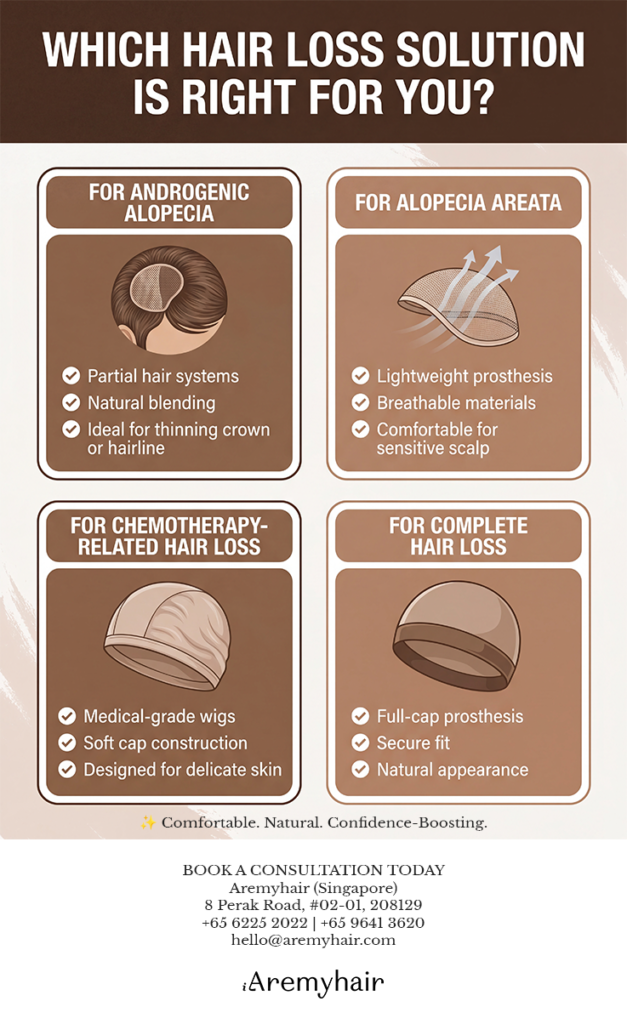
FOR ANDROGENIC ALOPECIA
Individuals with partial thinning often benefit from partial hair systems or customised prosthetic solutions that blend naturally with existing hair.
These solutions provide targeted coverage while maintaining a highly natural appearance.
FOR ALOPECIA AREATA
Since hair loss patterns can fluctuate, lightweight and flexible medical prostheses are often ideal. They provide comfort while accommodating scalp sensitivity.
FOR CHEMOTHERAPY-RELATED HAIR LOSS
Medical-grade wigs and prostheses are usually the preferred choice because they are specifically designed for delicate, sensitive scalps and prolonged wear.
FOR COMPLETE HAIR LOSS
Full-cap medical prostheses provide complete coverage with realistic density, natural hairlines, and superior comfort for daily use.
WHY PROFESSIONAL GUIDANCE MATTERS
Choosing between a traditional wig and a medical hair prosthesis is not simply about appearance. Factors such as scalp condition, lifestyle, climate, maintenance, and long-term comfort all play a role.
A professional consultation can help determine:
- The most suitable base material
- Appropriate hair density
- Human hair vs synthetic options
- The ideal attachment method
- Long-term maintenance needs
At Aremyhair, our experienced team works closely with each client to create personalised solutions that look natural and feel comfortable. We believe every individual deserves compassionate support and honest guidance throughout their hair restoration journey.
FINDING THE RIGHT SOLUTION FOR CONFIDENCE AND COMFORT
When dealing with hair loss alopecia, the right solution should do more than simply cover hair loss. It should help you feel comfortable, confident, and like yourself again.
While traditional wigs may work well for temporary or occasional use, medical hair prostheses provide superior comfort, realism, and support for individuals experiencing alopecia or medical hair loss.
Whether you are exploring options for androgenic alopecia, alopecia areata, chemotherapy-related hair loss, or looking for a long-term alopecia hair fall treatment solution, professional medical-grade systems can offer a meaningful improvement in both appearance and quality of life.
At Aremyhair, we specialise in personalised, non-surgical hair replacement and medical wigs designed for comfort, realism, and long-term confidence.
BOOK A FREE CONSULTATION WITH AREMYHAIR TODAY and let our experienced team help you discover the right solution for your needs.
👉 Visit our studio to experience the Aremyhair difference firsthand.
📞 Contact us today to learn more about our medical hair prosthesis and customised hair replacement solutions.
Sources:
- American Academy of Dermatology – Hair Loss: Diagnosis and Treatment
https://www.aad.org/public/diseases/hair-loss/treatment/diagnosis-treat - National Alopecia Areata Foundation – Alopecia Areata Overview
https://www.naaf.org/alopecia-areata/overview/ - Cleveland Clinic – Alopecia Overview
https://my.clevelandclinic.org/health/diseases/12142-alopecia - Mayo Clinic – Hair Loss Causes and Treatments
https://www.mayoclinic.org/diseases-conditions/hair-loss/symptoms-causes/syc-20372926 - Johns Hopkins Medicine – Hair Loss Overview
https://www.hopkinsmedicine.org/health/conditions-and-diseases/hair-loss